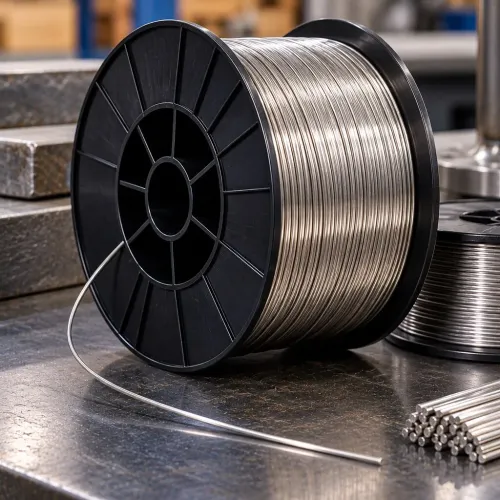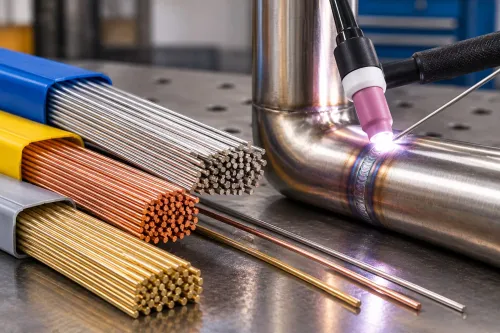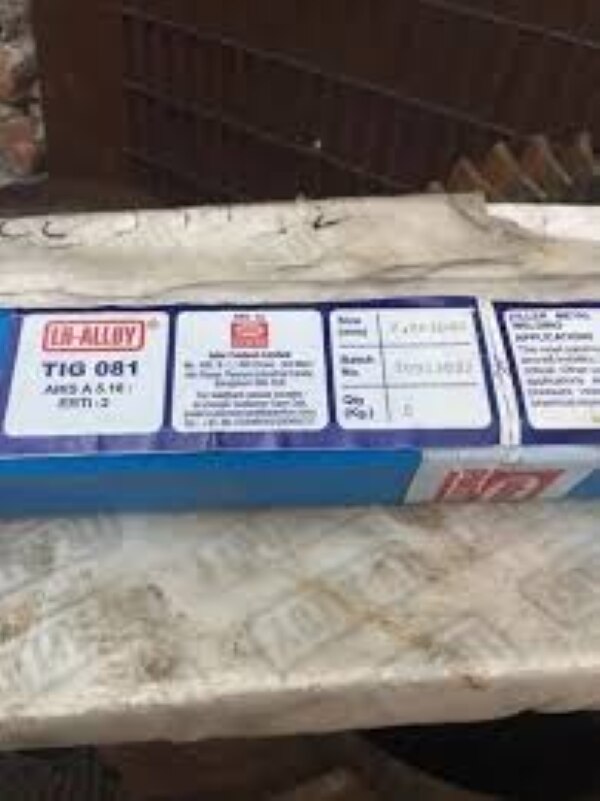
Choosing titanium filler wire starts with matching the AWS classification to the base-metal grade, not with colour, diameter or availability. By the end, you will know when ER Ti 2 is appropriate, how to specify its diameter and certification, and which shielding and supply details to verify before welding.
Key takeaways
- ERTi-2 is commercially pure titanium Grade 2, not Ti-6Al-4V Grade 5.
- Match filler diameter to joint thickness, welding current and the qualified procedure.
- Use high-purity argon with torch, trailing and back-purge protection.
- Blue, purple or grey weld colours indicate titanium contamination or inadequate shielding.
What does ER Ti 2 mean under AWS A5.16?
ERTi-2 is the AWS A5.16 classification for commercially pure titanium Grade 2 filler metal. It is not Ti-6Al-4V Grade 5, so titanium filler wires er ti 2 are not interchangeable with alloyed titanium wire.
A Grade 2 certificate should identify titanium as the balance and report actual heat or lot values for controlled oxygen, nitrogen, carbon, hydrogen, iron and other residual elements. Do not accept only a trade name: chemistry varies within specification limits, and the certificate proves what the supplied wire contains.
1. Expect useful corrosion resistance, good ductility and moderate strength from Grade 2 weld metal. The applicable material specification and qualified welding procedure specification (WPS) govern the final weld-metal requirements, not the classification alone.
2. Grade 2 filler can suit commercially pure titanium Grades 1, 2, 3 and 4 when the qualified procedure permits that combination. Confirm the base-metal grade before ordering.
3. Ti-6Al-4V Grade 5 is commonly paired with ERTi-5. Grade 9, Ti-3Al-2.5V, requires a procedure and filler selection suited to that alloy; ERTi-2 is not a default substitute.
Before selecting the wire, verify the base-metal grade, service temperature, corrosion environment and governing welding procedure. Never choose ER Ti 2 simply because it is the only wire in stock; a chemistry or strength mismatch can leave a sound-looking joint unsuitable for service.
How do joint thickness and welding current determine filler diameter?
A 2 mm filler suits some medium-thickness GTAW work, but it is not a universal choice. Filler diameter follows joint thickness, root opening, joint design, welding position, deposition required and the current range permitted by the WPS.
| Diameter | Typical decision | Risk if mismatched |
|---|---|---|
| 1.6 mm | Thin sheet, tight root gaps and lower-current work | Excess filler, heat and an oversized bead |
| 2.0 mm | Medium sections within the qualified GTAW range | Poor control if the joint is thin or the gap is tight |
| 2.4 mm or larger | Thicker sections, wider grooves or higher deposition needs | Insufficient melting if current and torch capacity are too low |
Thicker joints do not always require one large wire; multiple passes can control heat and bead shape. Compare the WPS diameter and current range with torch capability, travel speed and heat-input limits. Do not infer compatibility from whichever diameter is available.
For an ER Ti 2 filler wire quotation, compare:
- Alloy and AWS classification
- Diameter, net package weight and quantity
- Chemical or lot certificate
- Taxes, freight and delivery basis
Titanium density is about 4.51 g/cm³. Approximately 1.6 mm solid wire weighs 9.1 g/m, while 2.4 mm wire weighs 20.4 g/m, so titanium welding wire price per kilogram does not reveal usable metres. State “ER Ti 2 filler wire” in the request and compare packages on both mass and length.
What GTAW shielding does titanium require?
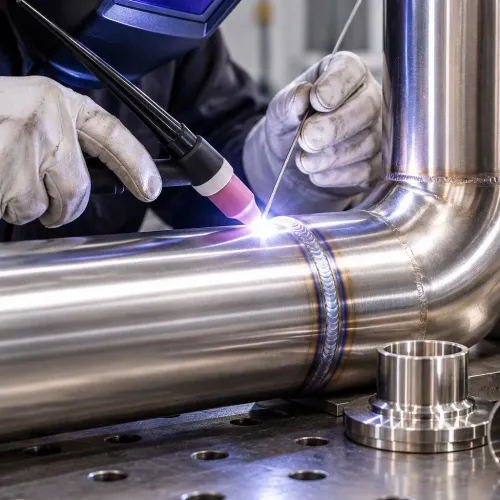
Use direct current electrode negative (DCEN), high-purity argon, a gas lens and a cup large enough to cover the arc and pool. Titanium also needs a trailing shield for the hot weld zone, plus backside argon purging when the joint geometry leaves hot metal exposed.
- Set gas flow, torch stand-off, cup size, travel speed, trailing-shield length, purge duration and post-flow with the actual torch, cup and equipment.
- Record those qualified values in the WPS. Increasing flow alone can create turbulence and draw air into the shield.
- Purge enclosed sections until the procedure-defined oxygen condition and stable flow are reached.
- Maintain backside coverage through the specified cooling period, especially on butt joints, thick sections and components with a large heated area.
- Keep the filler end inside the protected gas envelope until it cools; withdrawing it into air can contaminate the weld before the arc resumes.
Shielding only the arc is insufficient for titanium. The molten pool, hot filler end and cooling weld zone all require protection, so inspect trailing-shield coverage and backside purge performance rather than judging the torch gas alone. Qualify the complete arrangement for the joint geometry, and verify leaks, drafts and uneven gas distribution before production welding.
What do titanium weld colours reveal about contamination?
A sound titanium weld normally remains bright silver; a limited straw or light-gold tint is acceptable only when the qualified procedure allows it. Blue, purple, grey, white or powdery colour signals increasing atmospheric exposure and is commonly a rejection signal, not a cosmetic defect that grinding can reliably cure.
1. Before striking the arc, remove oil, paint, moisture, fingerprints, dust and shop debris from the joint and work area. Contamination left on the surface can cause porosity and discoloured weld metal.
2. Degrease the filler with a suitable non-chlorinated solvent. Use dedicated clean tools, and brush titanium only with a stainless-steel brush that has never touched carbon steel.
3. Handle filler with clean gloves and return it to closed, clean packaging after opening. Oily handling and workshop dust can remain unnoticed until the weld develops porosity or unacceptable colour.
4. When colour changes appear, stop and investigate gas leaks, poor purge, inadequate torch coverage, excessive stand-off, drafts, contaminated cups and insufficient post-flow. Shield the molten pool, hot filler end and cooling weld zone from air.
Surface cleaning before welding prevents contamination; it does not restore contaminated weld metal afterward. Do not treat blue, purple, grey, white or powdery welds as sound simply because grinding makes the surface look cleaner. Examine the procedure and weld disposition before continuing.
How should you specify and source ER Ti 2 in Mumbai?
Put the technical identity on the purchase request before you search for a titanium filler wire supplier in Mumbai. State the AWS A5.16 edition, or another accepted standard, ERTi-2 classification, base-metal grade, intended welding process, diameter, form, surface condition, quantity, manufacturing lot and required chemical or lot certificate.
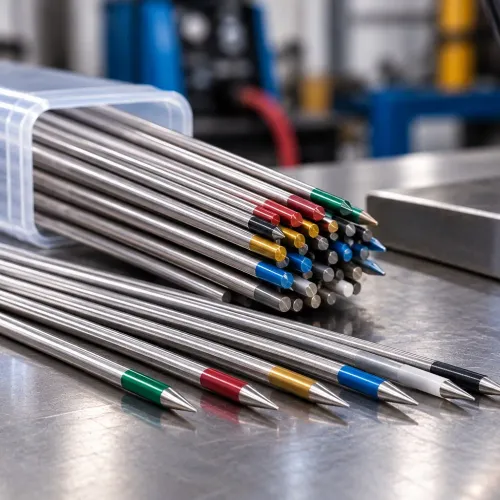
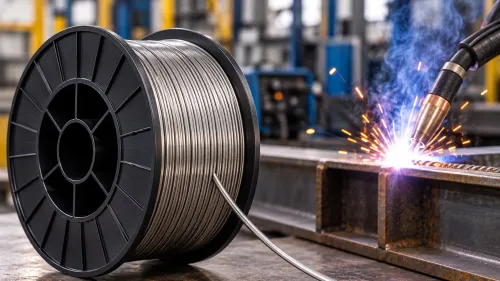
1. Specify whether you need straight lengths, coil or spool, then state the required clean, oxide-free surface condition and certificate contents. A request for “titanium wire” alone can return commercially pure wire, Ti-6Al-4V wire or non-welding titanium wire.
2. Ask the supplier to confirm the actual available diameter, package net weight, manufacturing lot, certificate availability, import-backed or local stock status, and realistic replenishment lead time. Do not treat a catalogue listing as proof of current stock.
3. Require the quotation to separate material price, taxes, freight and delivery basis. Titanium welding wire price is not comparable across offers unless alloy, classification, diameter, net weight, quantity and certification match; a certified small package can cost more per kilogram because testing, packaging, import and minimum-order costs are spread over less material.
RND Welding Pvt Ltd is a Mumbai-based industrial consumables supplier you can contact for stock and documentation checks. You remain responsible for matching the certificate and welding procedure specification to the job.
Related product
 | Welding Electrodes ₹ 2,800/KgGet Latest Price Wire Thickness 2 mm Grade Titanium-2 Brand Ador fontech Material Stainless Steel Color Silver Packaging Box Established in... View product → |
Frequently asked questions
What does ER Ti 2 mean under AWS A5.16?
ERTi-2 is the AWS A5.16 classification for commercially pure titanium Grade 2 filler metal. It is different from Ti-6Al-4V Grade 5 filler wire and is not interchangeable with it.
How do joint thickness and welding current determine filler diameter?
Select filler diameter alongside joint thickness, weld profile and GTAW current in the qualified welding procedure. Thin sheet and lower current require smaller wire; thicker joints and higher deposition rates require larger wire.
What GTAW shielding does titanium require?
Titanium GTAW requires high-purity argon shielding at the torch, plus protection for the hot weld and the root when the joint design exposes them. Use a trailing shield and back purge where the weld remains hot after leaving the arc.
What do titanium weld colours reveal about contamination?
A bright silver weld indicates effective shielding. Straw, blue, purple, grey or white deposits indicate increasing exposure to oxygen, nitrogen or moisture and require investigation before accepting the weld.
How should you specify and source ER Ti 2 in Mumbai?
State AWS A5.16 ERTi-2, required diameter, form, quantity, lot traceability and certification requirements. Ask the titanium filler wire supplier in Mumbai for the batch number, material certificate and sealed packaging before comparing titanium welding wire price.
Keywords