A filler wire can meet its AWS strength classification and still produce a joint that cracks, corrodes, lacks toughness or fails in the heat-affected zone. By comparing chemistry, classification, diameter, process, shielding gas, certification and handling, you can select a consumable that suits the base metal and the service conditions rather than relying on the wire label alone.
Key takeaways
- Match filler chemistry to base metal and service temperature.
- Use AWS classification to check strength, toughness and usability.
- Set wire diameter, current and shielding gas together.
- Qualify the complete joint; a wire certificate is not enough.
How should filler-wire chemistry match the base metal?
Match filler chemistry to the base-metal chemistry and service environment, not to tensile strength alone. A matching filler metal suits carbon steel when weld-metal strength, toughness and hydrogen control align with the design; an undermatching filler can reduce restraint and cracking risk if the code permits its lower strength.
An over-alloyed filler metal can preserve corrosion resistance after dilution, but the strongest wire does not automatically produce the strongest joint.
| Base metal | Preferred chemistry decision | Main control |
|---|---|---|
| Carbon or low-alloy steel | Matching or approved undermatching filler | Check weld-metal strength, hardenability and hydrogen cracking risk |
| Austenitic stainless steel | Matching grade or controlled over-alloyed filler | Control ferrite number; too little ferrite promotes hot cracking, while too much can reduce toughness, ductility or corrosion performance |
| Nickel alloy | Matching nickel filler or compatible transition filler | Limit dilution and brittle phases; verify corrosion and service-temperature performance |
| Titanium | Matching titanium grade filler | Prevent oxygen and nitrogen pickup, which embrittles the deposit |
| Dissimilar metals | Nickel-base transition filler when specified | Accommodate dilution, thermal-expansion mismatch and carbon migration; reduce galvanic and brittle-interface risks |
- Measure or confirm dilution in the qualified joint; carbon or low-alloy steel can strip corrosion resistance from stainless or nickel weld metal.
- Review ferrite control using the applicable constitution diagram or measured Ferrite Number.
- Check for galvanic mismatch, carbon migration and brittle phases at the interface during service and heat treatment.
- For high-strength quenched-and-tempered or TMCP steel, verify yield strength and toughness after the specified PWHT cycle; as-welded classification values are not enough.
- Qualify the actual geometry and process for porosity, lack of fusion, cracking and HAZ weakness.
What do AWS filler-wire classifications tell you about joint performance?
An AWS classification identifies the deposited weld metal’s chemistry, strength category and usability; it does not guarantee the finished joint’s strength. ER70S-6, for example, signals a solid carbon-steel wire with a nominal 70-ksi tensile-strength class, while the classification’s yield strength and elongation requirements remain separate values.
| Classification | Engineering signal | What it does not guarantee |
|---|---|---|
| ER70S-6 | Carbon-manganese-silicon solid wire; 70-ksi tensile class | Joint strength after dilution, hydrogen exposure or PWHT |
| ER308L | Low-carbon austenitic stainless chemistry | Ferrite balance, pitting resistance or impact toughness in your procedure |
| ER309L | Higher-chromium, nickel-bearing stainless transition filler | Immunity from carbon migration, dilution cracking or service-temperature limits |
| ERNiCrMo-3 | Nickel-chromium-molybdenum corrosion-resistant filler family | Performance after dilution or an unsuitable PWHT cycle |
| ERTi-2 | Commercially pure titanium filler grade | Shielding adequacy, oxygen pickup or final joint ductility |
For stainless and nickel alloys, chemistry controls corrosion resistance, ferrite content, hot-cracking resistance and service-temperature suitability. For notch-toughness work, tensile strength alone is inadequate: shielding gas, oxygen and nitrogen pickup, heat input, interpass temperature, multipass cycling and PWHT can change impact results.
Check the exact AWS specification and its shielding-gas condition against the project’s ASME Section II, Part C requirement or EN ISO consumable standard. Then verify the procedure qualification, not just the certificate, for yield strength, elongation, impact temperature and diffusible-hydrogen designation such as H5 or H10.
A wire can meet its AWS classification yet fail the contract’s impact, hydrogen or post-PWHT requirement.
How do process, wire diameter and shielding gas change the weld?
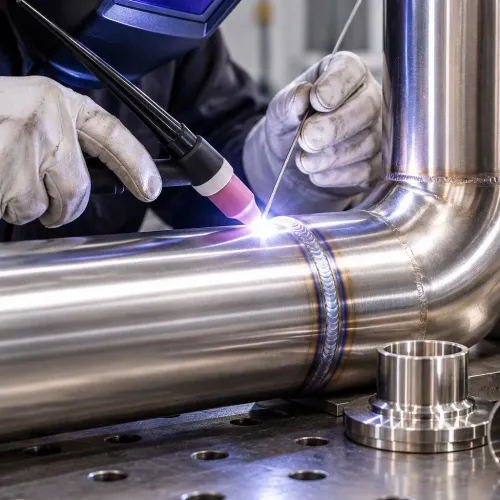
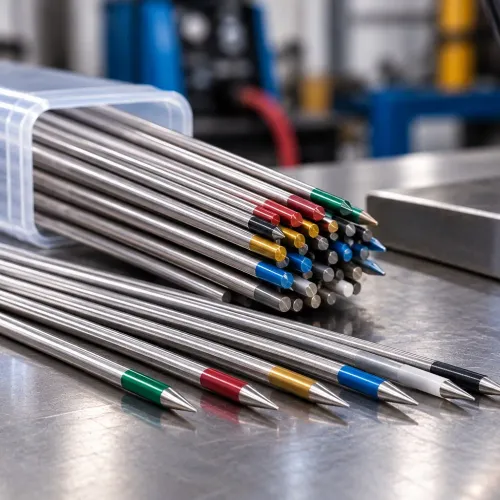
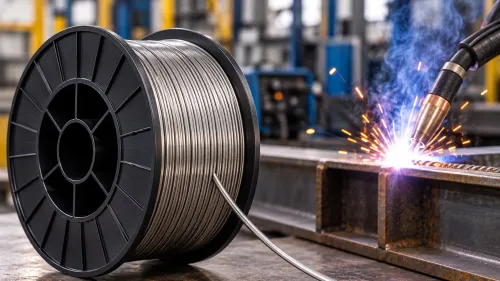
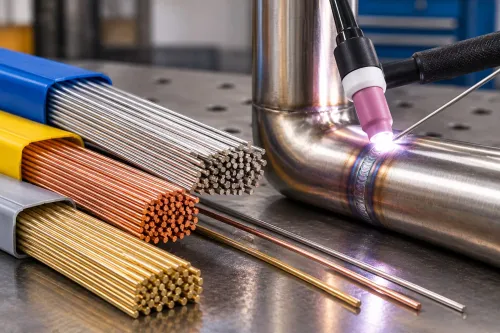
Choose the process that fits the joint before choosing diameter. Use a GTAW/TIG filler rod for precise, low-deposition work, root passes, thin sections or restricted access; GMAW/MIG solid wire for clean, continuous production; and FCAW wire for higher deposition, outdoor work or heavy sections where its flux system suits the procedure.
| Process | Current, polarity and control | Best fit |
|---|---|---|
| GTAW/TIG filler rod | DCEN for steel and stainless steel; the rod carries no arc current, so deposition stays low and heat remains controllable | Thin material, root access, visible-quality welds and positional precision |
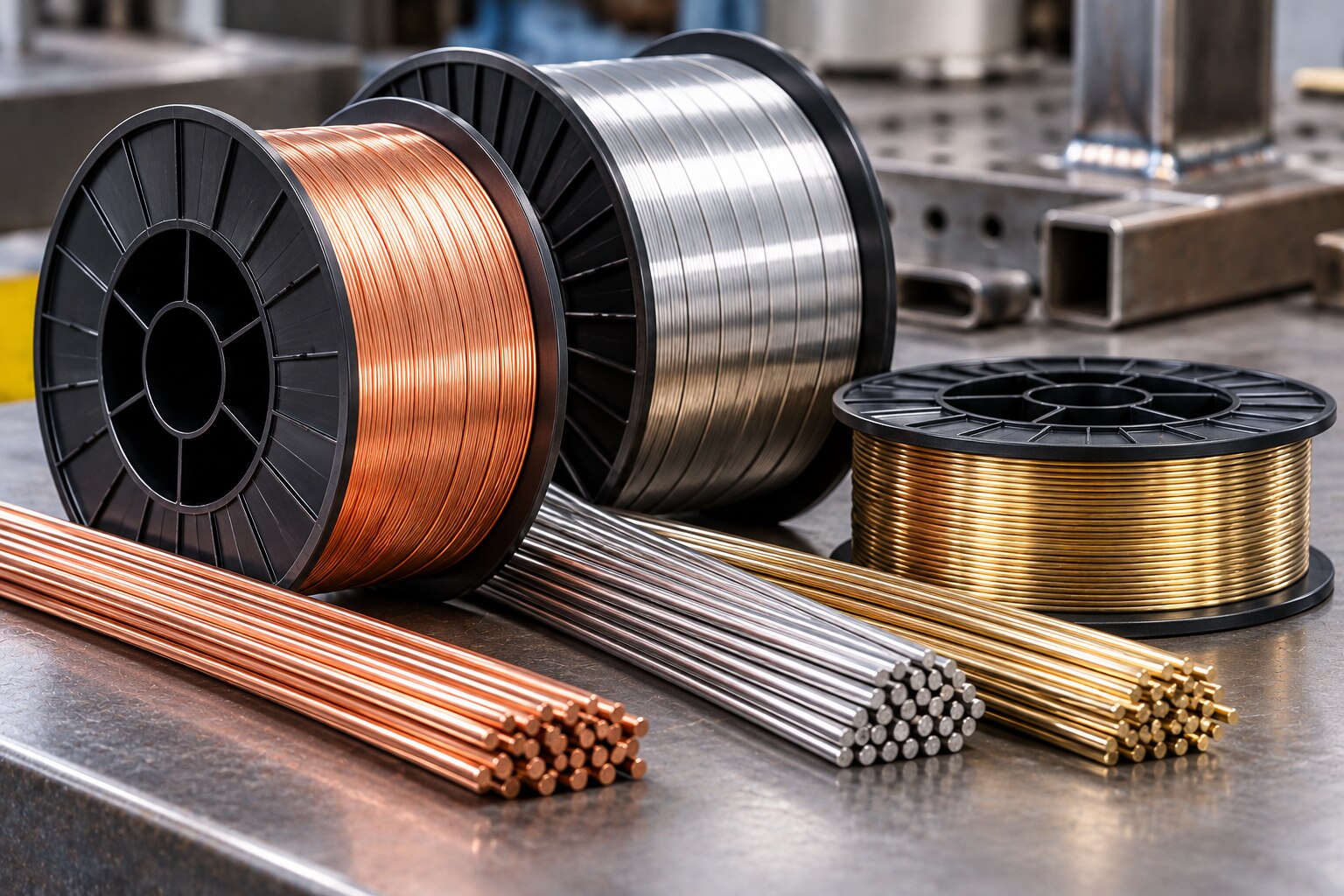
| GMAW/MIG solid wire | Usually DCEP; diameter and amperage set transfer mode, bead size, penetration and deposition rate | Clean shop production with stable shielding gas and continuous wire feed |
| FCAW wire | Flux is essential; gas-shielded types use external gas, while self-shielded types rely on the core and follow the manufacturer’s polarity | Heavy sections, higher deposition, wind exposure or difficult site work |
A larger wire is not automatically faster: it needs higher current and produces a larger bead, greater heat input and distortion. In a narrow groove or vertical weld, it can bridge the joint while leaving poor sidewall fusion; a smaller diameter improves positional control but may require more passes and arc time.
Match diameter to thickness, joint access, position, travel speed and machine range.
Shielding gas changes the same wire’s arc mode, spatter, oxidation, penetration and chemistry. Argon supports a stable, low-spatter arc; added carbon dioxide increases penetration and oxidation, while helium blends raise heat and deposition. Use the gas named in the qualification, because changing the mixture can alter toughness and weld-metal chemistry.
Why must you qualify the joint instead of trusting the wire certificate?
A wire certificate describes deposited all-weld metal, not the complete welded joint. Dilution changes its chemistry, while lack of fusion, porosity, undercut, hydrogen cracking, restraint, or an inferior heat-affected zone can reduce strength even when the certificate meets its tensile requirement. Overmatching filler does not rescue a hardenable base metal or a poorly controlled joint.
Joint qualification must reproduce the conditions that control failure:
- Use the actual joint geometry, base metals, welding position, process, shielding gas and consumable lot.
- Record preheat, interpass temperature, heat input, bead sequence and multipass thermal cycling; control cleanliness and follow low-hydrogen consumable procedures to limit hydrogen cracking.
- Include PWHT when the production joint will receive it, because tempering, softening or embrittlement can change weld-metal and heat-affected-zone properties.
- Test tensile strength together with bend or macroexamination, hardness and impact toughness when the service requires notch toughness. Tensile strength alone will not reveal poor fusion, a brittle region or inadequate low-temperature performance.
- Set the qualification’s service-temperature requirement against the actual design temperature, rather than accepting the filler classification’s nominal strength.
The test must expose the interaction between dilution, restraint, base-metal hardenability and thermal history. A clean, low-hydrogen wire can still produce a delayed crack if preheat is inadequate, while sound tensile specimens can hide porosity or toughness loss.
Qualify the procedure and control the specified lot; do not treat the certificate as proof of joint performance.
What should you verify before the wire reaches the arc?
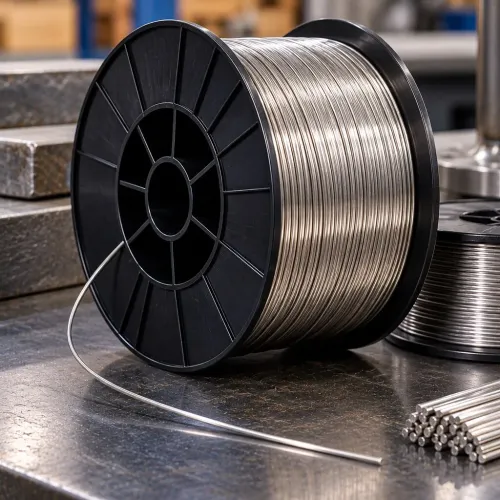
Do not load a spool until its identity and paperwork agree. Obtain the mill certificate, AWS classification, heat number or batch number, chemical composition, mechanical properties and batch traceability.
Compare every entry with the purchase order, project code and governing specification; a weldable wire is still unacceptable if its impact qualification or hydrogen designation does not meet the contract.
Reject the package if you find:
- A broken seal, illegible label or missing heat number
- Rust, oil, grease, moisture or embedded dirt on the wire
- A spool that does not match the certificate or purchase order
- Damaged packaging that has exposed the wire to shop contamination
Record the receiving decision, then seal opened packages against dust, humidity and oil. The wire storage and handling rule depends on the consumable:
| Consumable | Control before use | What goes wrong when ignored |
|---|---|---|
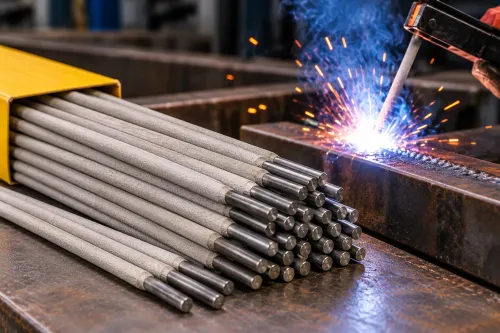
| Covered low-hydrogen electrode | Rebake and hold within the specified temperature range; follow the manufacturer’s time limits | Absorbed moisture raises diffusible hydrogen and cracking risk |
| Solid GMAW wire | Do not rebake; keep the spool covered and feed it through clean equipment | Contamination causes porosity, unstable feeding and hydrogen-related defects |
| Flux-cored or metal-cored wire | Follow the product datasheet for exposure and storage limits | Moisture or damaged packaging changes arc behaviour and weld chemistry |
Use a clean, dedicated wire brush; never brush oil or rust onto the weld zone. Inspect the feeder liner and contact tip for wear, blockage and incorrect size. Leak-test hoses, regulator connections and the gun, and keep shop air away from the arc because compressor oil and moisture contaminate shielding gas.
RND Welding Pvt Ltd can support Mumbai teams with consumables supplied alongside documentation and lot traceability for controlled receiving.
Related products
 | Welding Electrodes ₹ 2,800/KgGet Latest Price Wire Thickness 2 mm Grade Titanium-2 Brand Ador fontech Material Stainless Steel Color Silver Packaging Box Established in... View product → |
 | Welding Electrodes ₹ 800/KgGet Latest Price Material Flux cored wire Thickness 1.2 mm Wire Material SS Grade FC 308l Brand Taseto Quantity Per Roll 12.5 kg Established... View product → |
Frequently asked questions
How should filler-wire chemistry match the base metal?
Match chemistry to the base metal, weld-metal strength, toughness, hydrogen control and service environment. An undermatching filler can reduce restraint and cracking risk when the governing code permits it.
What do AWS filler-wire classifications tell you about joint performance?
AWS classifications identify properties such as tensile strength, yield strength, elongation, impact toughness, usability and, for some products, hydrogen control or shielding requirements. Read the full classification rather than relying on the wire trade name.
How do process, wire diameter and shielding gas change the weld?
The welding process, wire diameter and shielding gas control deposition rate, penetration, arc stability, spatter, bead shape and heat input. Select them as one parameter set for the joint position and thickness.
Why must you qualify the joint instead of trusting the wire certificate?
A wire certificate describes the consumable, not the finished weld. Procedure qualification confirms that the base metal, joint design, preheat, interpass temperature, parameters and welder technique achieve the required results.
What should you verify before the wire reaches the arc?
Check the AWS classification, batch or lot number, certificate, diameter, surface condition, packaging, storage history, expiry or retest information and shielding-gas compatibility before loading the wire.
Related product
 | Stainless Steel Welding Electrodes ₹ 3,800/KgGet Latest Price Length 350 mm Material Stainless Steel Operating Current AC/DC Brand Arocos Size 3.15 mm Application/Usage Construction We... View product → |