Choosing a nickel electrode by trade name or price can produce cracking, porosity, dilution problems or a weld metal that fails in service. By the end, you will be able to match the AWS classification to the base metals and service environment, check supplier documents, and set purchasing and welding controls without relying on a generic “nickel” description.
Key takeaways
- Match the electrode to the alloy, service conditions and dissimilar-joint design.
- Verify AWS A5.11 classification, batch details, packaging and documentation before ordering.
- Control amperage, interpass temperature, heat input and shielding to limit weld defects.
- Compare repair cost with inspection, rework and replacement before selecting a consumable.
What nickel welding consumables are and how AWS classifications identify them
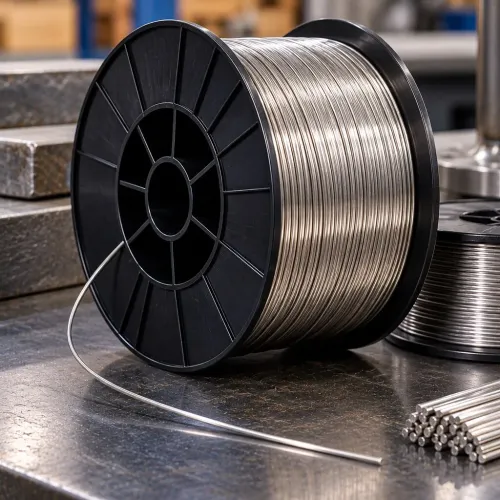
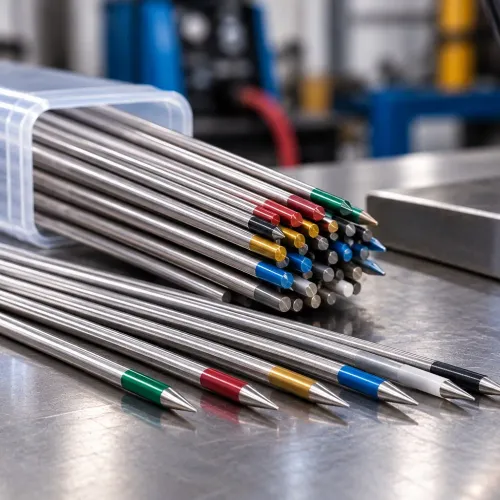
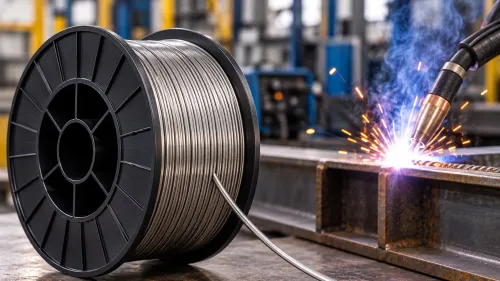
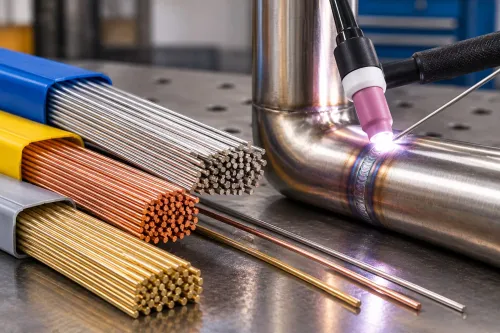
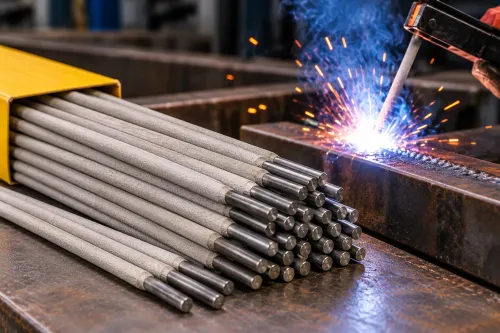
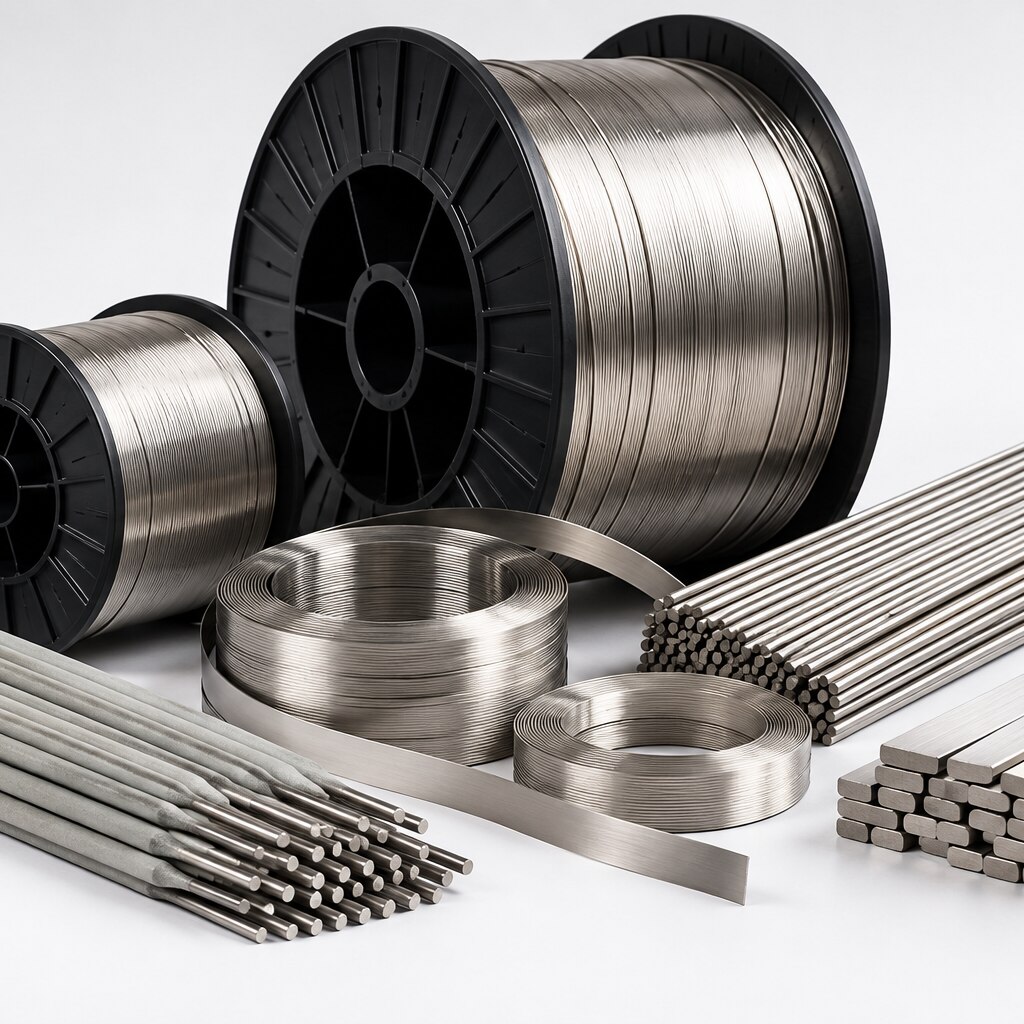
Nickel welding consumables include covered electrodes, bare wire and bare rods. Covered nickel and nickel-alloy electrodes are classified under AWS A5.11, while bare nickel-alloy wire and rod are commonly specified under AWS A5.14.
Buyers seek nickel welding consumables in Mumbai for corrosion resistance, high-temperature strength, compatibility with nickel alloys and tolerance of dilution in dissimilar joints.
In ENiCrCoMo-1, E identifies a covered electrode; Ni identifies the nickel-alloy family; CrCoMo names the principal alloying elements in the deposited weld metal; and the final number identifies the specific classification. “Nickel electrode” is not a sufficient purchase description because different classifications produce different weld-metal chemistry, operating requirements and service performance.
Write the purchase order as a control document:
- State the complete AWS classification, such as ENiCrCoMo-1, and the alloy designation.
- Specify electrode, wire or rod diameter.
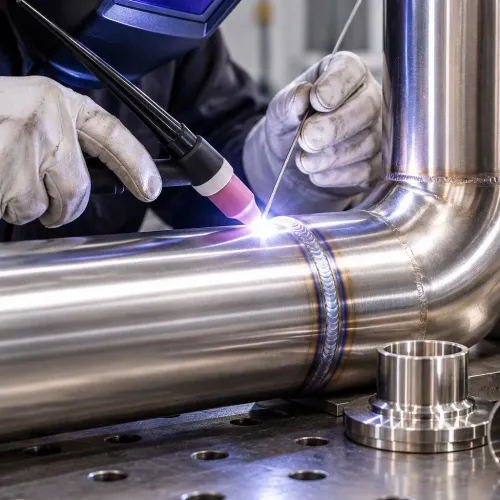
- Name the welding process, such as SMAW, GTAW or GMAW.
- Record the required polarity.
- State the permitted welding position.
- Identify certificate and traceability requirements, including an applicable ISO classification or EN 10204 Type 3.1 document when specified.
An AWS classification does not replace a qualified WPS or the manufacturer’s technical data sheet. Confirm current, shielding gas, service limits and compatibility against both documents before welding.
ENiCrCoMo-1, ENiCrFe-3, ENiCu-7 and ENi-1: which electrode fits the joint
The wrong electrode can crack, corrode or lose strength even when the weld looks sound. Compare the deposited chemistry and joint conditions before choosing by trade name.
| Classification | Deposited chemistry | Compatible base metals | Service temperature and corrosion environment |
|---|---|---|---|
| ENiCrCoMo-1 | Nickel-chromium-cobalt-molybdenum | Compatible high-temperature nickel alloys, including Alloy 617-type materials; selected dissimilar joints under a qualified WPS | High-temperature service; molybdenum improves resistance in reducing or pitting-prone environments. Confirm the limit in manufacturer data and the design specification. |
| ENiCrFe-3 | Nickel-chromium-iron | Nickel alloys, nickel-to-steel and other dissimilar joints | Useful where dilution tolerance and hot-cracking resistance matter; verify temperature and corrosion limits for the deposit. |
| ENiCu-7 | Nickel-copper | Compatible nickel-copper alloys | Use for specified corrosion environments and compatible grades, not as a general nickel filler. |
| ENi-1 | Commercially pure nickel | Compatible nickel grades | Selected alkaline or caustic service; confirm temperature, concentration and impurities against the specification. |
ENiCrCoMo-1 suits demanding nickel-alloy work, but thermal expansion, dilution and chloride exposure still require procedure qualification. Do not substitute classifications by name alone.
A buyer searching “E NiCrCoMo-1 welding electrodes” or “ENiCrCoMo electrode in Mumbai” must request the complete ENiCrCoMo-1 classification, not merely “NiCrCoMo.” Verify the base-metal grade, operating temperature, chloride or caustic exposure and qualified WPS. Search terms such as “e nicrcomo 1 welding electrodes” and “nicrcomo electrode in mumbai” do not establish chemistry or suitability.
How to verify a nickel electrode before placing a Mumbai purchase order
Do not approve a nickel electrode from its trade name. Begin with the approved base-metal grade and qualified WPS, then ask the nickel welding consumables supplier for documents that prove the proposed product fits both.
- Request the manufacturer’s technical data sheet, complete AWS A5.11 or applicable ISO classification, deposited-weld chemistry, recommended process and polarity, diameter range, welding-position limits and service-temperature guidance.
- Require the batch or lot number, manufacturing date or shelf-life statement, sealed-packaging condition and a certificate matching the package marking.
- Where the specification calls for it, request EN 10204 Type 3.1 inspection documentation; an invoice does not establish weld-metal chemistry or classification compliance.
| Document | Check before approval | Why it matters |
|---|---|---|
| Technical data sheet | Chemistry, process, polarity, diameter, position and temperature | Similar names can conceal different operating requirements |
| Certificate | Classification, chemistry and batch or lot match the pack | Prevents an untraceable substitution |
| Package marking | Diameter, classification, batch and shelf-life | Confirms the delivered item is the ordered item |
| EN 10204 Type 3.1 | Included when the project specification requires it | Provides inspection data beyond an invoice |
Write the electrode diameter in the purchase order, not only the classification. Record the required welding position, polarity and certificate type as separate fields.
On receipt, compare the printed package marking with the certificate and purchase order. Photograph damaged seals, quarantine damp or unidentified packs, and retain the batch record through fabrication and inspection. RND Welding Pvt Ltd is useful when it matches a requested classification to documented available stock instead of offering a generic nickel product.
Related products
 | Welding Electrodes E nicrcomo-1welding electrodes ₹ 4,000/KgGet Latest Price Diameter 2.5 mm X 450 mm Material Stainless Steel Brand Arcos Application/Usage Construction Operating Current AC/DC Size... View product → |
 | Stainless Steel Welding Electrodes ₹ 2,800/KgGet Latest Price Diameter 2.5 mm X 450 mm Material Stainless Steel Size 3.15 mm Length 450 mm Operating Current AC/DC Application/Usage... View product → |
Welding controls for nickel electrodes: current, heat, shielding and storage
Use the qualified WPS and the electrode manufacturer’s data sheet to set welding controls; electrode diameter alone cannot establish a safe current range. For industrial welding consumables in Mumbai, require documented procedure limits rather than relying on nominal settings.
1. Take amperage, voltage, polarity, arc length, travel speed, shielding-gas composition and flow from those documents. Control heat input and interpass temperature for the actual nickel alloy. Use short stringer beads, limited weaving, controlled crater filling and enough cooling between passes to reduce hot cracking and distortion.
2. Machine or grind away oil, paint, primer, scale, ink and embedded iron before welding. Use dedicated grinding wheels and stainless-steel brushes.
Leak-test the torch, and specify argon purity and flow instead of ordering only “argon.” Helium or argon-helium blends can increase arc energy and penetration, but they also raise gas consumption and sensitivity to flow disturbances.
3. Keep covered electrodes in sealed original packs until use. After opening, record exposure time and follow the manufacturer’s stated oven temperature and holding time for that coating. Do not infer a redrying schedule from a catalogue listing or rebake electrodes without manufacturer approval; excess moisture can cause porosity, hydrogen-related defects and unstable arc behaviour.
Dissimilar joints, repair economics and inspection requirements
A filler that matches one parent metal can still fail in a dissimilar joint. Nickel-to-steel and nickel-to-stainless welds demand tolerance for dilution, thermal-expansion mismatch and hot cracking, while chloride, caustic or high-temperature service determines the acceptable deposited chemistry.
| Classification | Typical selection | Decision point |
|---|---|---|
| ENiCrFe-3 | Nickel-to-steel, nickel-to-stainless and nickel-alloy joints | Dilution tolerance and hot-cracking resistance |
| ENiCrCoMo-1 | Alloy 617-type and other compatible high-temperature nickel alloys | Confirm molybdenum-bearing chemistry, temperature and service environment |
| ENiCu-7 | Compatible nickel-copper alloys | Verify corrosion medium and thermal conditions |
| ENi-1 | Compatible commercially pure nickel and selected alkaline or caustic service | Confirm purity, temperature and WPS limits |
Nickel-alloy buttering or cladding creates a qualified transition layer before the second material is welded. Machine it, then leave enough sound thickness to prevent excessive parent-metal dilution in the final joint; this is a procedure-design step, not a replacement for qualification.
Compare total joint cost, not price per kilogram. Include:
- Deposition efficiency and joint volume
- Rework, gas consumption and electrode drying losses
- Buttering, machining and inspection
- Failure consequences in corrosive or high-temperature service
Use liquid-penetrant testing for surface-breaking cracks and porosity in non-ferromagnetic nickel welds, radiography for relevant volumetric defects, and ultrasonic testing where the qualified procedure and geometry support planar or internal-defect detection. Keep the WPS, welder qualification, batch traceability and final inspection records linked to the joint.
Validate ENiCrFe-3, ENiCrCoMo-1, ENiCu-7 or ENi-1 against the actual repair and service conditions.
Frequently asked questions
Which AWS standards identify nickel welding consumables?
AWS A5.11 classifies covered nickel and nickel-alloy electrodes. AWS A5.14 commonly specifies bare nickel-alloy wire and rod.
When should you use ENiCrCoMo-1, ENiCrFe-3, ENiCu-7 or ENi-1?
Choose the classification by matching the base alloy, dissimilar-joint combination, corrosion or temperature service and required weld properties. Confirm the procedure before ordering.
How do you verify a nickel electrode before placing a Mumbai purchase order?
Check the AWS classification, manufacturer, diameter, batch or heat number, expiry or retest information, sealed packaging and material test documentation.
What welding controls matter when using nickel electrodes?
Set current within the electrode datasheet range, limit heat input and interpass temperature, use the specified shielding, and store electrodes under the manufacturer’s drying and holding conditions.
What must you consider for dissimilar nickel joints and repairs?
Confirm compatibility, joint preparation, preheat and interpass limits, welding procedure qualification, non-destructive examination and the total cost of inspection and rework.
Related products
 | Welding Electrodes Enicrfe3 Stainless Steel Welding Rod Diameter - 2.5/3.15/4.00/5.00mm Material - NICKEL Welding rod Brand - Esab / Ador / D&H SECHERON/ HONAVOR Application/Usage Construction Country of... View product → |
 | Stainless Steel Welding Electrodes ₹ 3,800/KgGet Latest Price Length 350 mm Material Stainless Steel Operating Current AC/DC Brand Arocos Size 3.15 mm Application/Usage Construction We... View product → |
Keywords